
PM's economic advisory council chairman C Rangarajan has asked microfinance institutions (MFIs) to overhaul their "flawed" business model for sustainability.

Bibek Debroy was one of the very few economists not bound by any single area of expertise and was simultaneously curious about economics and politics, myths and maths, chess and chemistry, and what not, remembers Laveesh Bhandari.
"For some more time inflation can increase. It could touch 13 per cent, but by December it will start declining and is likely to moderate to 8-9 per cent by March 2009," said outgoing chairman of the PMEAC C Rangarajan while releasing the Economic Outlook for 2008-09.
Even in the coming fiscal, the growth is likely to be in the range of 7 to 7.5 per cent, the PM's panel said, adding that inflation will moderate to four per cent by February-end. The gross domestic product growth was 9 per cent in 2007-08 and inflation has already declined to below six per cent in January from the peak of 12.91 per cent in August 2008.
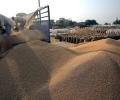
T Nanda Kumar, former food and agriculture secretary, shared his memories of working with former prime minister Manmohan Singh during some of India's most challenging times, highlighting Singh's compassionate leadership and commitment to ensuring food security for all Indians. Kumar recalled Singh's steadfast support during the 2008 global food crisis, where he championed a ban on non-basmati rice exports to secure domestic supplies. Singh's leadership, characterized by intellect and humility, left a lasting impression on Kumar, who considered him a mentor and guiding light.
PM's economic advisors have suggested a hike in petrol and diesel prices to tackle the global crude prices.
The Prime Minister's Economic Advisory Council on Monday projected the economic growth in the country at 8.6 per cent for the current fiscal on the back of rebound in farm output and inflation to come down to 7 per cent by March-end due to declining food prices.

The Prime Minister's economic panel on Tuesday said it could revise upward the economic growth forecast to 7 per cent from 6.5 per cent for the current fiscal on the back of robust economic growth in the second quarter.

Subramanian's paper comes at a time when concerns have been raised in various quarters about the official economic growth numbers. The Economic Advisory Council-PM said the Base Year of India's income calculations were shifted to 2011-12 on the basis of recommendations of several committees with experts in national income accounting.
The Indian economy grew at a faster pace of over 8 per cent in two consecutive fiscal before falling to a nine year low of 6.5 per cent in 2011-12.
The men who advice the man who runs the country are experts and their experience says it all.

'Our problem is not a budget deficit but a trust deficit. We need to trust our institutions and industries to innovate and lead. That is the way forward for India.'

Owing to uncertainties on higher inflation and muted growth in the United States (US), coupled with concerns around America's rising debt and tariffs imposed by President Donald Trump, the world's largest economy has become the epicentre of an unabated record rally in prices of precious metals.

The Reserve Bank should focus on making liquidity easier rather than cutting rates if the intent is to drive growth, Axis Bank's chief economist Neelkanth Mishra said on Tuesday. Mishra, who is also a part-time member of the Economic Advisory Council to the PM, said the rate cut announced earlier this month or even the subsequent ones if they were to come will not end up increasing borrowings as the scarce liquidity will hamper transmission.
Higher economic growth can be sustained only in an atmosphere of reasonable price stability
The Prime Minister's Economic Advisory Council on Friday cut its growth forecast for the current fiscal to 7.1 per cent, lower than the previous projection of 7.7 per cent, due to "painful adjustments" to the ongoing global economic turmoil. India's economy had grown 9 per cent in 2007-08.

Economic Advisory Council to the Prime Minister has identified ten themes, including economic growth and job creations that need attention.

The Reserve Bank of India has forecast the economy to grow by 6 per cent with an upward bias.

Chief Minister MK Stalin has shown that he is cut from a different cloth when it comes to embracing what is current, modern and absolutely necessary. Thus, even while retaining the spirit and content of the pan-Tamil, Dravidian socio-political and socio-economic ideology to the 't', his government has also acknowledged the need to accepting scientifically-proven facts in operational matters, says N Sathiya Moorthy.

Experts warn that air pollution in India is a major public health crisis, leading to a surge in undiagnosed airway diseases and cardiovascular issues. They urge for urgent action, early detection, and treatment.
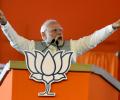
Prime Minister Narendra Modi's goal of making India a high-income economy by 2047 is unlikely to be achieved, but the country should become an upper middle-income nation by then, Financial Times chief economics commentator Martin Wolf said on Friday. Wolf further said that India would also become a superpower by 2047. "India wishes to become a high-income country by 2047.

Using the same methodology as the EAC-PM study, the fastest-growing religious population is, in fact, the Buddhists. The Buddhist population increased by over 1,600 per cent between 1950 and 2015.

"The Union Budget represents the aspirations of 130 crore Indians and lays out the path towards India's development. I invite you all to share your ideas and suggestions for this year's Budget on MyGov," the PM said according to a statement posted on his official website on Thursday.

The Economic Advisory Council to the Prime Minister, of which he is chairman, has quickly sought to distance itself and the government from Dr Debroy's views.

India's economy is moving towards a higher growth trajectory and is likely to grow at around 10 per cent in 2021-22, Economic Advisory Council to the Prime Minister (EAC-PM) chairman Bibek Debroy said on Wednesday. "I am confident that we are on a path towards a higher growth trajectory, higher poverty reduction, higher employment, and a prosperous, more developed and better governed India. "I think it is, more or less, agreed that the real rate of growth this year (FY2022) is going to be around 10 per cent," Debroy said at an SBI event. At the beginning of FY2021-22, the forecasts for real growth were in the 8.5-12.5 per cent range, he noted.

Prime Minister's Economic Advisory Council Chairman C Rangarajan dashes bullion firms' duty cut hopes.
The panel noted that the macro-economic fundamentals of the economy are sound but challenges remain, several of which are structural in nature.

Bhalla will succeed former RBI deputy governor Subir Gokarn, who died in the US on July 30 after a brief illness.
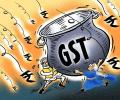
Economic Advisory Council to the Prime Minister (EAC-PM) chairman Bibek Debroy on Tuesday said the government was losing revenue due to the GST, which should be revenue neutral with a single rate. Speaking at an event organised by the Calcutta Chamber of Commerce in Kolkata, he however said that GST has led to a lot of simplification. "The ideal GST is one that has a single rate, and it was meant to be revenue neutral.

Says licensing of new banks should be a continuous process instead of the current stop-go system

Muslims' share in the reservation will keep on increasing also because of "conversion and infiltration because they are having a secular cover from them (the Congress)", he added.
India needs a National Trade Policy Council, chaired by a minister who reports directly to the PM, says Jayanta Roy, former economic advisor to the Union commerce ministry.
The panel may include or seek inputs from former RBI Governor Urjit Patel, former chief economic advisor Arvind Subramanian, Sajjid Chinoy of the PM-EAC, Rathin Roy, among others.
Economists want the government to focus on jobs, farms, and fiscal consolidation. They also favour re-imposition of the long-term capital gains tax on listed securities and mutual funds.

Disagreeing with Reserve Bank's projection on the price situation, former RBI Governor and PM's Economic Advisory Council chairman C Rangarajan said WPI and CPI may not be as high as being projected by the central bank.

The country's economy will start witnessing a growth of 6.5 to 7 per cent from fiscal 2023 onwards, helped by various reforms undertaken by the government so far and also as COVID-19 vaccination drive progresses, Chief Economic Advisor Krishnamurthy Subramanian said. He said the second wave of COVID-19 is unlikely to have a very significant on the economy. The country's economy contracted by 7.3 per cent in fiscal 2020-21. "Together with the reforms and focus on vaccination, I expect growth to start hitting close 6.5 to 7 per cent from FY23 onwards and accelerate from there on," Subramanian said at a virtual event organised by Dun & Bradstreet.

Under the new Monetary Policy Framework, the central bank aims to contain inflation at 4 per cent with a band of (+/-) 2 per cent.

He is survived by two sons, Rajiv Bajaj and Sanjiv Bajaj, and a daughter Sunaina Kejriwal.

In a paper, EAC-PM accused Subramanian of "cherry-picking high-frequency indicators" to express his skepticism about the growth rates after 2011-12.

'Poor home work, and a subsequent loss of nerve.' 'This sums up the Modi government's current travails, the stall in key sectors, fading momentum, irritability,' points out Shekhar Gupta.
